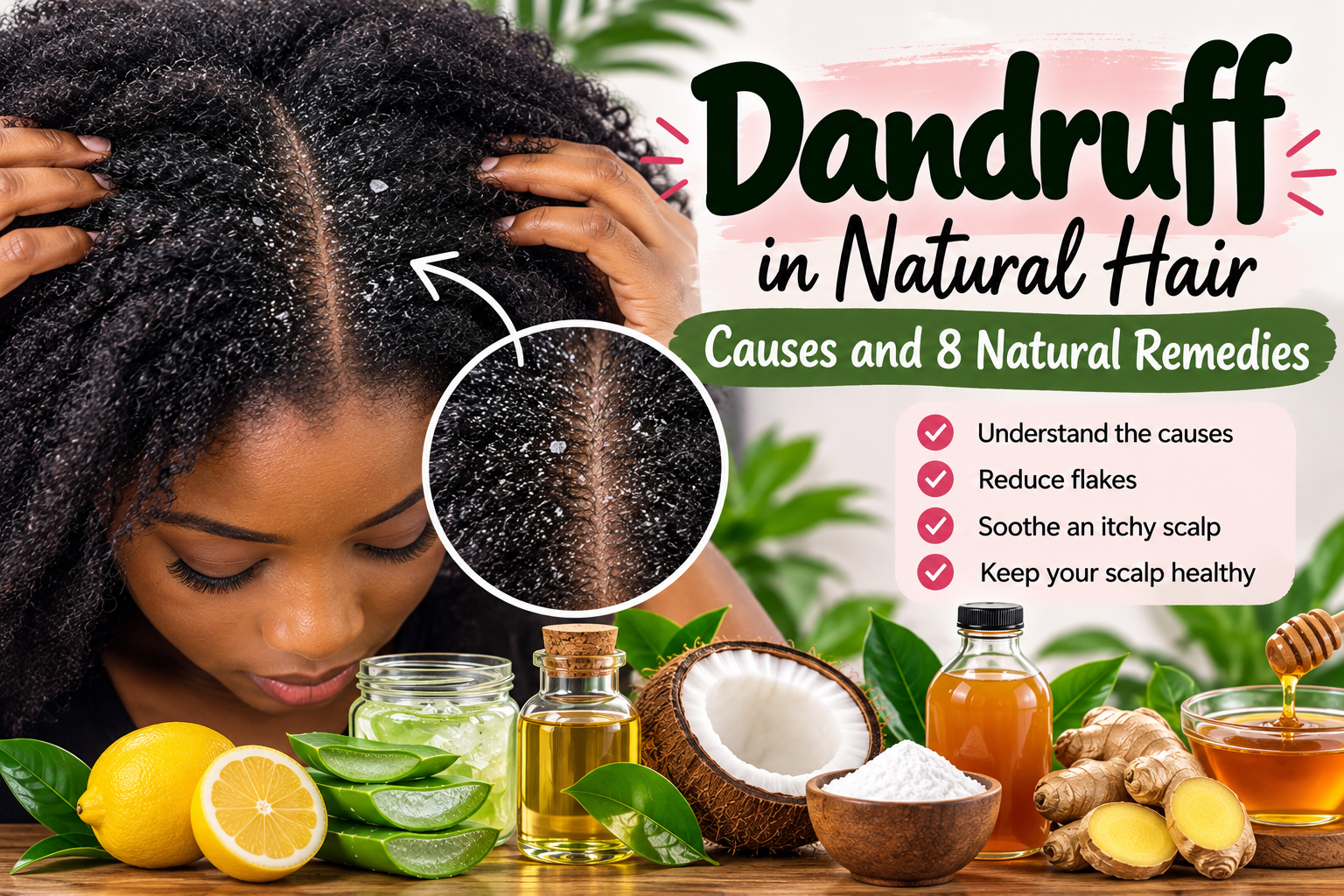

Dandruff in Natural Hair: Causes and 8 Natural Remedies
Dandruff is a common scalp condition characterised by white or grey flakes of dead skin and itching. You may notice the flakes on your shoulders, clothes or in your hair. Although dandruff is not contagious, it can be embarrassing and uncomfortable.
If you have natural hair, dandruff can make your scalp uncomfortable and your hair-care routine frustrating. Understanding the causes of dandruff and exploring different scalp-care approaches can help you find what works best for you.

Causes of Dandruff
- Malassezia: Malassezia is a yeast that naturally lives on the scalp. In some people, it contributes to dandruff by triggering irritation and the shedding of skin cells.
- Dry skin: A dry scalp can cause flakes and itching. However, dry scalp and dandruff are not exactly the same condition.
- Oily scalp: Excess oil can contribute to dandruff because Malassezia feeds on oils found on the scalp. This can lead to irritation and increased flaking.
- Shampooing habits: Shampooing too infrequently may allow oil and dead skin to accumulate, while washing too often with harsh products may dry or irritate the scalp.
- Unhealthy diet: Diet is not usually a direct cause of dandruff, but eating a balanced diet supports overall skin health.
- Stress: Stress may trigger or worsen dandruff in some people.
- Sensitivity to hair products: Certain shampoos, conditioners, fragrances and styling products can irritate the scalp and cause itching or flaking.
8 Natural Remedies for Dandruff

Natural ingredients are popular in hair-care routines, and some people use them to manage scalp discomfort and flakes. Results can vary, and not every home remedy has been proven to treat dandruff. Here are eight remedies commonly used in natural hair care.
1. Lemon
Lemon juice is a popular home remedy for dandruff. Its acidic properties are often cited as a reason for using it on the scalp. Some people apply freshly squeezed lemon juice to their scalp before washing their hair.
2. Aloe Vera
Aloe vera is known for its soothing properties and is commonly used to relieve scalp discomfort. It also contains compounds with antimicrobial activity, making it a popular ingredient in natural scalp-care routines.
3. Pre-pooing
Pre-pooing involves applying oil to your hair before shampooing. Coconut oil, castor oil and olive oil are popular choices. This step can help condition your hair, reduce dryness and make wash day easier.
4. Salicylic Acid (Aspirin)
Salicylic acid is used in some anti-dandruff products to help loosen and remove flakes. Aspirin is sometimes suggested as a homemade alternative, although it is not the same as a formulated salicylic acid treatment.
5. Baking Soda
Baking soda is another ingredient people use in homemade hair-cleansing routines. Some apply it as an alternative to shampoo in an attempt to remove flakes and buildup.
6. Apple Cider Vinegar (ACV)
Apple cider vinegar is a popular natural hair-care ingredient. Some people use a diluted ACV rinse after shampooing as part of their scalp-care routine.
7. Ginger and Honey
Ginger and honey are used together in some homemade scalp treatments. Honey has been studied for its antimicrobial properties, while ginger is valued in traditional home remedies.
To prepare the mixture, blend some ginger and mix it with honey. Apply the mixture to your scalp, leave it for about 30 minutes if comfortable, then rinse thoroughly.
8. Coconut Oil and Castor Oil
Coconut oil and castor oil are popular ingredients for moisturising and conditioning natural hair. To prepare this mixture, combine one spoonful of coconut oil with one spoonful of castor oil. Warm gently, apply to your hair, cover with a shower cap and wash out after about 30 minutes.
A little reminder: Everyone’s scalp is different. Use home remedies with care, avoid applying irritating ingredients to broken skin, and stop using any remedy that causes burning, redness or increased itching. Some remedies may help with hair conditioning without necessarily treating the underlying cause of dandruff.
Other Scalp Conditions Similar to Dandruff
If you have tried different remedies and your flakes do not improve, another scalp condition could be responsible.
1. Dry Scalp
A dry scalp occurs when the skin loses moisture or becomes irritated. This may happen after using harsh shampoos, washing too frequently or using products that dry out the skin. Heat and chemical treatments can also contribute to scalp dryness or irritation.
Dry scalp and dandruff can look similar, but they may need different approaches. A gentle shampoo and avoiding irritating products may help.
2. Product Buildup
Product buildup occurs when oils, gels, creams and other styling products accumulate on the hair and scalp. It can make the hair feel coated or heavy, and the residue may resemble flakes.
Washing your scalp regularly with an appropriate shampoo can help remove buildup. You do not have to stop using all your favourite natural hair products; finding a suitable balance is important.
3. Psoriasis
Scalp psoriasis is a skin condition that can cause thick, raised patches covered with silvery scales. The patches may extend beyond the hairline and can be itchy or uncomfortable.
Psoriasis is different from ordinary dandruff and may require specific treatment. If you suspect psoriasis, speak to a healthcare professional.
When Should You Seek Help?
If your scalp is very itchy, painful, swollen or crusted, you notice hair loss, or the flaking does not improve with appropriate treatment, speak to a pharmacist or healthcare professional. They can help identify the cause and recommend suitable treatment.
Final Thoughts
Dandruff can be frustrating, especially when you are trying to maintain healthy natural hair. Understanding the possible causes and choosing suitable scalp-care products can help you manage flakes and discomfort.
Natural ingredients can have a place in your hair-care routine, but remember that a remedy that works for one person may not work for another. Pay attention to how your scalp responds and seek advice if symptoms persist.
Do you know of any other home or natural remedies for dandruff? Have you tried any of the remedies mentioned above? Please share your experience in the comments below.
Thanks for reading


