Tag: Haircare

  • Dandruff: Causes and Home Remedies

    Dandruff: Causes and Home Remedies

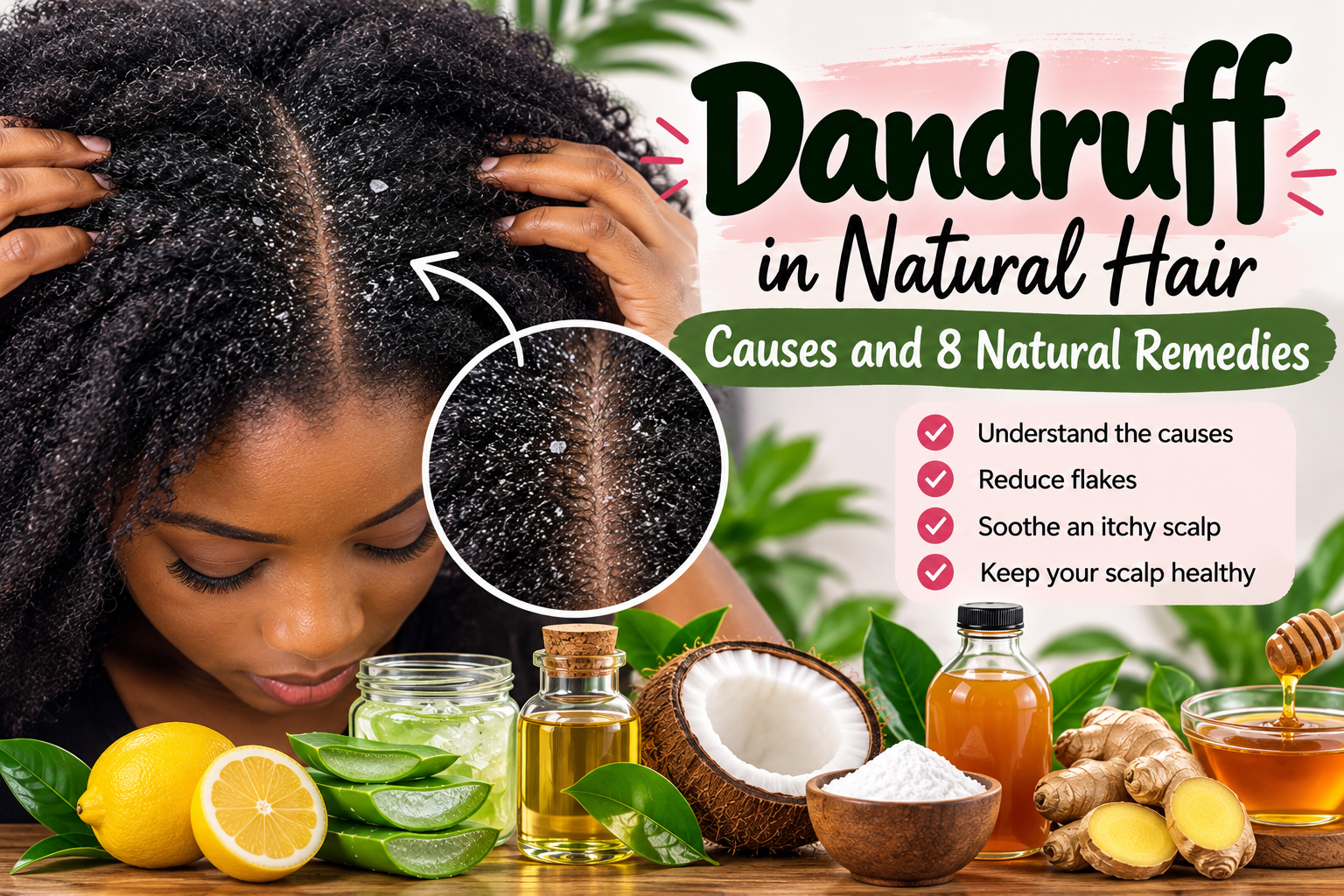
    Dandruff in Natural Hair: Causes and 8 Natural Remedies


    Dandruff is a common scalp condition characterised by white or grey flakes of dead skin and itching. You may notice the flakes on your shoulders, clothes or in your hair. Although dandruff is not contagious, it can be embarrassing and uncomfortable.

    If you have natural hair, dandruff can make your scalp uncomfortable and your hair-care routine frustrating. Understanding the causes of dandruff and exploring different scalp-care approaches can help you find what works best for you.

    Causes of Dandruff

    • Malassezia: Malassezia is a yeast that naturally lives on the scalp. In some people, it contributes to dandruff by triggering irritation and the shedding of skin cells.
    • Dry skin: A dry scalp can cause flakes and itching. However, dry scalp and dandruff are not exactly the same condition.
    • Oily scalp: Excess oil can contribute to dandruff because Malassezia feeds on oils found on the scalp. This can lead to irritation and increased flaking.
    • Shampooing habits: Shampooing too infrequently may allow oil and dead skin to accumulate, while washing too often with harsh products may dry or irritate the scalp.
    • Unhealthy diet: Diet is not usually a direct cause of dandruff, but eating a balanced diet supports overall skin health.
    • Stress: Stress may trigger or worsen dandruff in some people.
    • Sensitivity to hair products: Certain shampoos, conditioners, fragrances and styling products can irritate the scalp and cause itching or flaking.

    8 Natural Remedies for Dandruff

    Natural ingredients are popular in hair-care routines, and some people use them to manage scalp discomfort and flakes. Results can vary, and not every home remedy has been proven to treat dandruff. Here are eight remedies commonly used in natural hair care.

    1. Lemon

    Lemon juice is a popular home remedy for dandruff. Its acidic properties are often cited as a reason for using it on the scalp. Some people apply freshly squeezed lemon juice to their scalp before washing their hair.

    2. Aloe Vera

    Aloe vera is known for its soothing properties and is commonly used to relieve scalp discomfort. It also contains compounds with antimicrobial activity, making it a popular ingredient in natural scalp-care routines.

    3. Pre-pooing

    Pre-pooing involves applying oil to your hair before shampooing. Coconut oil, castor oil and olive oil are popular choices. This step can help condition your hair, reduce dryness and make wash day easier.

    4. Salicylic Acid (Aspirin)

    Salicylic acid is used in some anti-dandruff products to help loosen and remove flakes. Aspirin is sometimes suggested as a homemade alternative, although it is not the same as a formulated salicylic acid treatment.

    5. Baking Soda

    Baking soda is another ingredient people use in homemade hair-cleansing routines. Some apply it as an alternative to shampoo in an attempt to remove flakes and buildup.

    6. Apple Cider Vinegar (ACV)

    Apple cider vinegar is a popular natural hair-care ingredient. Some people use a diluted ACV rinse after shampooing as part of their scalp-care routine.

    7. Ginger and Honey

    Ginger and honey are used together in some homemade scalp treatments. Honey has been studied for its antimicrobial properties, while ginger is valued in traditional home remedies.

    To prepare the mixture, blend some ginger and mix it with honey. Apply the mixture to your scalp, leave it for about 30 minutes if comfortable, then rinse thoroughly.

    8. Coconut Oil and Castor Oil

    Coconut oil and castor oil are popular ingredients for moisturising and conditioning natural hair. To prepare this mixture, combine one spoonful of coconut oil with one spoonful of castor oil. Warm gently, apply to your hair, cover with a shower cap and wash out after about 30 minutes.

    A little reminder: Everyone’s scalp is different. Use home remedies with care, avoid applying irritating ingredients to broken skin, and stop using any remedy that causes burning, redness or increased itching. Some remedies may help with hair conditioning without necessarily treating the underlying cause of dandruff.

    Other Scalp Conditions Similar to Dandruff

    If you have tried different remedies and your flakes do not improve, another scalp condition could be responsible.

    1. Dry Scalp

    A dry scalp occurs when the skin loses moisture or becomes irritated. This may happen after using harsh shampoos, washing too frequently or using products that dry out the skin. Heat and chemical treatments can also contribute to scalp dryness or irritation.

    Dry scalp and dandruff can look similar, but they may need different approaches. A gentle shampoo and avoiding irritating products may help.

    2. Product Buildup

    Product buildup occurs when oils, gels, creams and other styling products accumulate on the hair and scalp. It can make the hair feel coated or heavy, and the residue may resemble flakes.

    Washing your scalp regularly with an appropriate shampoo can help remove buildup. You do not have to stop using all your favourite natural hair products; finding a suitable balance is important.

    3. Psoriasis

    Scalp psoriasis is a skin condition that can cause thick, raised patches covered with silvery scales. The patches may extend beyond the hairline and can be itchy or uncomfortable.

    Psoriasis is different from ordinary dandruff and may require specific treatment. If you suspect psoriasis, speak to a healthcare professional.

    When Should You Seek Help?

    If your scalp is very itchy, painful, swollen or crusted, you notice hair loss, or the flaking does not improve with appropriate treatment, speak to a pharmacist or healthcare professional. They can help identify the cause and recommend suitable treatment.

    Final Thoughts

    Dandruff can be frustrating, especially when you are trying to maintain healthy natural hair. Understanding the possible causes and choosing suitable scalp-care products can help you manage flakes and discomfort.

    Natural ingredients can have a place in your hair-care routine, but remember that a remedy that works for one person may not work for another. Pay attention to how your scalp responds and seek advice if symptoms persist.

    Do you know of any other home or natural remedies for dandruff? Have you tried any of the remedies mentioned above? Please share your experience in the comments below.

    Thanks for reading


  • 17 causes of hair breakage and how to fix it.

    17 causes of hair breakage and how to fix it.


    Hair breakage can be so heartbreaking and frustrating, especially to women, because the hair is a woman’s glory and an important part of our lives. There are so many causes of hair breakage, some of which may look harmless or innocent. The reasons range from carelessness, over-processing, hairstyles and even the way we handle our hair. Below are some causes of hair breakage and their solutions.


    1. Dehydration:
      Not drinking enough water on a daily basis can affect your overall health, including the health of your hair. Your body needs enough water to function properly, and staying hydrated is important for healthy hair. However, dryness and breakage can also be caused by how we care for and moisturise our hair.
    2. Unhealthy eating habits:When you depend on junk foods most of the time and neglect healthy foods necessary for healthy hair growth and strength, your hair can definitely suffer the consequences. Eat more healthy and nutritious foods to support healthy hair growth and strength.
    3. Split ends: This is the splitting of the hair ends as a result of heat, mechanical and chemical damage. It makes the ends of the hair look unequal and ragged. Trimming the split ends is the best remedy for this. You may feel reluctant about trimming your ends. If you don’t, the split can continue travelling up the strand and cause more damage.
    4. Combing hair when wet: Hair is more fragile when wet and tends to stretch and break more easily when handled roughly in this state. If you need to comb your hair when it is wet or damp, use a wide-tooth comb and be very gentle. Avoid forcing a comb through tangled hair.
    5. Chemical processing: Applying relaxers and dye too often to your hair can drastically weaken it and cause breakage. Some people opt for relaxing every month, which shouldn’t be necessary for most people. Retouching or chemically processing the hair too frequently can weaken the hair, especially when the chemicals overlap onto previously processed hair. Avoid unnecessary chemical processing or use it sparingly to help prevent hair breakage. 
    6. Towel drying: Using a towel each time you dry your hair and rubbing it rigorously can cause friction and lead to hair breakage. An alternative is to wrap your hair with an old T-shirt and gently squeeze out the excess water, then allow it to air dry.

      Towel drying
    7. Heat: If you are fond of flat ironing or blow-drying your hair every day, you might be putting your hair at risk of serious damage. Excessive heat can make the hair dry, weak and more prone to breakage. Limit excessive heat usage and always use a heat protectant when using heat on your hair. 
    8. Lack of moisture: Hair needs moisture especially African hair which is very dry, making it more susceptible to breakage. To moisturize your hair effectively, use the LOC (liquid, oil and cream) method. Starts by applying a water based leave in conditioner on your hair, follow it up with oil and seal with cream or butter e.g shea butter. Also deep condition your hair once weekly to retain moisture
    9. Over manipulation: Touching your hair too much can also make it easier for it to break off, so keep your hands off your hair.
    10. Exposure to ultraviolet rays and chlorinated water: Exposing your hair too often to harmful sun rays can break it too, applying avocado oil on your hair can prevent this. Whenever your hair comes in contact with chlorine maybe from a swimming pool, make sure to wash it thoroughly to avoid breakage.
    11. Hair products: Some hair products contain ingredients too harmful or drying for hair such as petrolatum, isopropyl alcohol, mineral oil, sodium lauryl sulfate etc. Go for natural ingredients such as Shea butter, coconut oil, castor oil, depending on what your hair needs.
    12. Prolonged and tight hairstyles: Keeping a hairstyle in for too long can be a reason for hair breakage, especially when the hair becomes tangled, dry or difficult to manage. Tight hairstyles can also pull, snap and snag your hair, and repeated tension around the edges can cause damage. Therefore, don’t keep your hair in for too long and stay away from hairstyles that are too tight or painful. 
    13. Combing: There is a saying that combing the hair often can make your hair longer. That’s definitely not true. Combing your hair too often or too aggressively can cause unnecessary manipulation and breakage. When you gather all the strands that come off each time you comb for about a week, you may be surprised by how much hair has broken or shed.
    14. Leaving the hair out too often: When hair is out most of the time, it can be easily manipulated, making it easier for breakage to occur. Protective hairstyles can help reduce excessive manipulation. Wear your hair in styles that protect your hair and, when appropriate, keep your ends tucked in.
    15. Washing hair frequently: Washing your hair too frequently, especially with harsh shampoos, can strip the hair of some of its natural oils and leave it feeling dry, which may contribute to breakage. However, you don’t necessarily have to wash your hair only once a week. Find a washing routine that works for your hair type, scalp and lifestyle.  Ensure you condition and moisturise your hair properly.
    16. Hairbands: Rubber bands and metal hairbands can pull, snag and rip the hair with repeated use. Make use of satin or silk hairbands and metal-free hairbands instead. Also, avoid tying your hair too tightly.
    17. Cotton pillowcase: This sounds harmless, but cotton pillowcases can create friction with your hair while you sleep and may contribute to dryness and breakage. Use a satin or silk pillowcase, wear a satin or silk scarf. You can also use a satin bonnet to protect your hair while you sleep.

    Read also: Are You Combing Your Natural Hair the Right Way?

    Other solutions include:

    1. Hot oil treatment: This can help to soften and condition the hair, especially when the hair feels dry.
    2. Protein treatment: Protein treatments can help strengthen hair that has become weak or damaged. However, don’t overuse them, as too much protein can make some hair feel stiff and dry.
    3. Deep conditioning: Deep conditioning regularly helps to keep the hair moisturised, soft and manageable, which can help reduce breakage.
    4. Castor oil application: Castor oil can help to seal in moisture and reduce dryness, especially when used with a moisturising product. Remember that castor oil itself does not moisturise the hair; it helps to seal in moisture.
    5. Washing hair in sections: For natural hair, washing the hair in sections can help to minimise tangling and excessive manipulation, which can help reduce breakage.

    Read also: Tangles and Knots in Natural Hair: 10 Ways to Prevent Them

    Thanks a lot for reading. ❤️ I will appreciate all your comments, likes and shares.

  • Are You Combing Your Natural Hair the Right Way? – Doing it Natural Blog

    This is an article I wrote on my new self hosted site.

    Combing natural hair can be a tough work, the tangles, knots and breakage experienced can be heart breaking and tiring. Are you thinking of giving up on your natural hair journey because of combing? Check this post out to know what you are doing wrong.

    http://doingitnaturalblog.com/2017/09/01/are-you-combing-your-natural-hair-the-right-way/